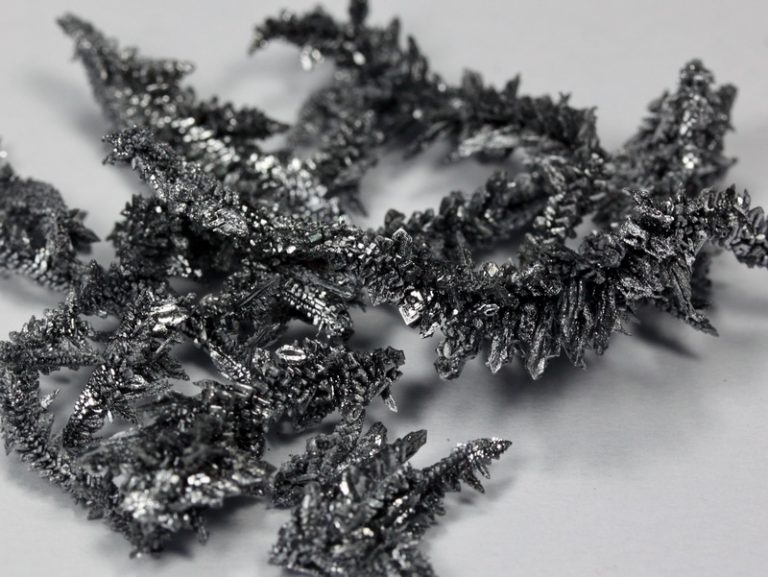
Vanadium, a still very little-known metal, could well be the “metal of tomorrow”: it could notably revolutionize the field of renewables. All the details on this mysterious metal whose potential is truly immense and unsuspected.
Shedding light on vanadium
 Vanadium is a white and shiny metal that is found combined in certain ores. It is in fact extracted from the processing of iron, copper, lead, zinc, and uranium ores, or from the refining of crude oil. Its particularity lies in the fact that it is a hard metal which nevertheless has the ability to deform plastically without breaking.
Another characteristic of vanadium: its beauty is such that it was named after Vanadis, the Scandinavian goddess of beauty better known as Freyja. Once it is extracted and then dissolved in water, vanadium indeed takes on a multitude of colors that are both intense and luminous: violet, yellow, blue, green…
A metal with multiple uses
If vanadium seems unknown to many, its use actually dates back to the Middle Ages. At that time, it was mainly used in metallurgy: it is notably found in the hammered steel of the famous patterns of “Damascus” blades. It was only from the 20th century that it began to be used in alloys intended for high-tech industries and military equipment. Added even in small quantities to another metal, vanadium indeed yields an alloy that is solid and yet exceptionally light.
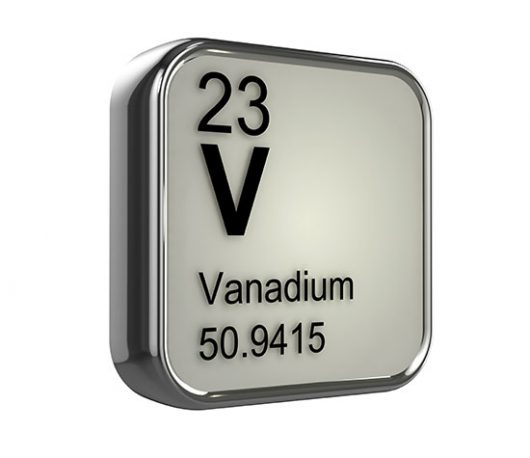
Note that it is often combined with steel for the manufacture of gears, bicycles, surgical instruments… But also mixed with aluminium or titanium to be used in certain jet engines.
But what makes vanadium the possible “metal of tomorrow” is, of course, the major role it could play in the revolution of renewable energies. It indeed represents a high-potential energy reserve: vanadium allows the creation of flow batteries whose energy storage capacities are enormous. This will thus enable the world to finally free itself from gas and coal, thereby reducing greenhouse gas emissions and promoting sustainable development at the same time.
Properly exploited, vanadium will thus contribute to the emergence of an energy market that is not only more efficient, but also safer and cleaner for the environment.
Extraction and global reserves
Vanadium is therefore a metal full of promise, but what about its current exploitation? Among the countries that currently dominate supply are Russia, China, South Africa and the United States. In terms of global reserves, vanadium presents only a moderate risk of shortage. Mainly because this metal is present in quantity in industrial waste: mining waste, alkaline wastes (red mud, steel slags…), construction and demolition waste…
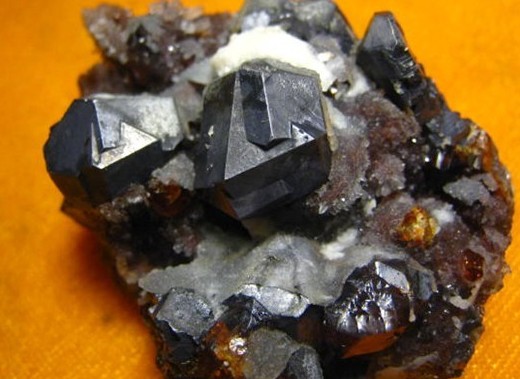
Many experts also assert that this waste could supply nearly 43% of annual vanadium production. The problem lies in the fact that there is not yet a way to extract it from industrial waste. Specialists are, however, working on multiple solutions to make this possible.