
Stainless steel is a widely used metal, and yet one about which little is known in terms of use, price and investment opportunities.
Made up of several alloys, stainless steel is a material in high demand among private individuals. Being an element belonging to the steel family, it is partly composed of iron and carbon. Stainless steel is a metal very present in your daily life.
Stainless steel is an iron alloy
Stainless steel, which is the shortened form of the term acier inoxydable, is a metal derived from a blend of alloys including iron, carbon, chromium as well as nickel.
For a conventional steel to be considered stainless steel, i.e. inox, it must contain at least 10.5% chromium according to the European standard.
In practice, the first stainless steel one can speak of contains 11% chromium, about 87% iron, 0.4% carbon and traces of sulfur, phosphorus, manganese, nickel…
Different types of stainless steel
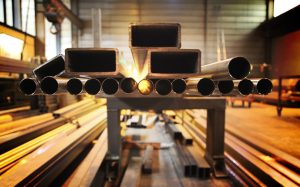
Depending on the content of the different metals that compose it, four major families of stainless steel can be distinguished :
– Martensitic stainless steels. Their chromium content is 12 to 18% and their carbon content can reach 1.2%. Their corrosion resistance is not very high, unlike their mechanical strength. They are also magnetizable.
– Ferritic stainless steels. Their carbon content is low, not exceeding 0.1% and their chromium content ranges between 11 and 25%. They are more resistant to corrosion and have good mechanical characteristics.
– Austenitic stainless steels. They generally contain 18% chromium and between 8 and 10% nickel. They show a great aptitude for deformation (thus easier to work) and good corrosion resistance. They are not magnetizable.
– Austenitic-ferritic stainless steels. They contain 20 to 25% chromium, 1 to 7% nickel. They have excellent mechanical characteristics.
Its use depends on its quality
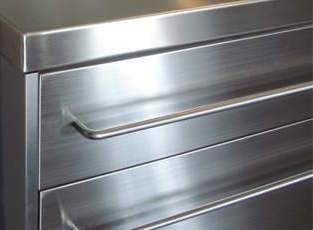
It is found everywhere, notably in our daily lives. Silver-colored or even shiny, stainless steel has its specificities, its values which, once processed, become an extraordinary metal. Like any other base metal, magnetic stainless steel is widely used in metallurgy and holds a considerable place on the market.
Professional or amateur kitchen utensils, even household ones, are essentially made of it. This metal captures a huge market share when referring to base metals.
But as we have already seen, there is not a single stainless steel or inox, but different stainless steels with very different properties. Their uses will therefore not be the same.
Martensitic steels, for example, thanks to their high hardness, are widely used for the manufacture of knife blades. Ferritic steels are used for gutters, roofing, chimney flues and structures, but also in decoration. Austenitic-ferritic steels are used for reinforcement in reinforced concrete.
A price highly dependent on the alloys
The price of stainless steel is strongly dependent on those of the elements that compose it. However, stainless steel is a material whose price is still accessible to the average investor. The kilo of stainless steel trades from 0.8 to 1.5 euros.
The tonne, meanwhile, is sold or bought starting from 2 000 dollars. We provide a range since the price of stainless steel depends on its quality. The least popular alloy, 18/8 stainless steel, is also the cheapest on the market.
Is the stainless steel market becoming volatile ?
As mentioned, the price of stainless steel depends on the prices of the materials that compose it. The price of stainless steel ranges from a few cents of euros to 3 euros per kilo. The price of other raw materials is therefore added to the base price of stainless steel, and that is how its real price is determined.
You should know that the value of alloy differentials must imperatively be added to the initially indicated price. If this basic rule is not respected, the transaction is null. For reasons of objectivity, the VEA is reassessed every month.
Always stay informed about the VEA
The VEA is a system that regulates the price of many other metals. It has become impossible to determine the price of certain raw materials without the VEA indices. The calculation process is simple. You only need to add the differentials of the alloying elements to those of the scrap. However, you cannot carry out this calculation yourself. This task falls to the organization known as SPAS.
The value of alloy differentials is the impact of the purchase costs of the raw materials that go into the composition of the various steels produced by steelmakers. Stainless steel is not the only metal that needs the VEA in order to properly round their fair prices. It therefore results from the addition of the differentials of the main alloying elements, namely tungsten, molybdenum, vanadium, cobalt, chromium, niobium and scrap.
Need to make ends meet? Go prospecting for stainless steel
Contrary to clichés, stainless steel is a material very easy to find. You will find a large quantity of it at home, since all kitchens are equipped with it. If you want to get a lot more, do not hesitate to prospect industrial kitchens. Ask them for the saucepans, pots, tables and all the other utensils that no longer serve them any purpose.
You will easily manage to resell them to an ironworker or a scrap dealer. Stainless steel is among the metals that are the best valued on the market. At present, the price of non-magnetic stainless steel ranks among the highest concerning the price of base metals put up for sale.
!function(e,i,n,s){var t=”InfogramEmbeds”,d=e.getElementsByTagName(“script”)[0];if(window[t]&&window[t].initialized)window[t].process&&window[t].process();else if(!e.getElementById(n)){var o=e.createElement(“script”);o.async=1,o.id=n,o.src=”https://e.infogram.com/js/dist/embed-loader-min.js”,d.parentNode.insertBefore(o,d)}}(document,0,”infogram-async”);