

The red metal is one of the few metals to occur in its native form (pure ore) in the Earth’s crust. It is therefore quite normal that it was also one of the first metals, like gold, that man discovered and worked. Since then, it has continuously been transformed and studied and, of course, improved.
Copper in the world
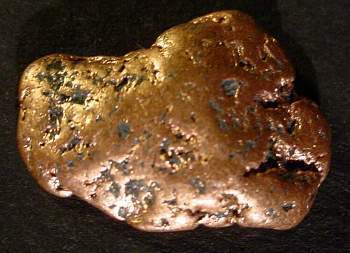
Since prehistoric times, copper has always been a metal widely used by humans. The red metal played a significant role in different civilizations and in many cultures. The history of this metal, from its first uses to the present day, spans about sixty centuries, a period of more than 6 000 years.
Because of its high ductility, its malleability, its unparalleled capacity for electrical and thermal conductivity, copper remains a predominant industrial metal. It is used in several fields, notably electronics, construction, electrical applications, plumbing, transport, consumer products and many others.
The current state of supply and demand
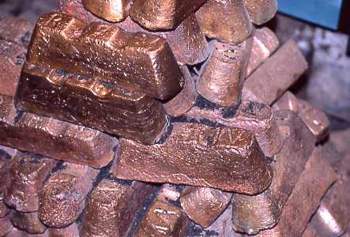
The global supply of copper in the form of ore is marked by major irregularities, which in turn regularly affect prices.
The irregularity of supply is closely related to Chile. As the world’s largest copper producer, the country can make supply vulnerable.
Recently, copper production in the country has tended to stagnate; the country lacks the ability to increase its output.
On the other hand, regarding demand, the current market for the red material is doing very well. It is steadily increasing.
Because of its resistance to corrosion and its good conductivity, a large number of industries use copper as a raw material. 50% of copper production is used in the electronics sector, notably in the manufacture of electrical cables. The development of this sector means that demand, particularly Chinese demand, is growing more and more.
Moreover, other research into its use in technology has attracted many. Indeed, researchers have found a way to combine copper with other elements in order to produce an increasingly unique metal, STOL. This alloy is most often used in computer components, a market that the Chinese giant seems to be appropriating day by day.
The evolution of the red metal’s price
Cochilco, a Chilean commission on copper, notes a forecasted decline in the price of copper for 2013 and 2014. According to the commission’s forecast, the average price per pound of copper will fall and would be 3.57 dollars for 2013.
This price will see another decline for 2014 with an average price of 3.5 dollars per pound. According to Cochilco, global demand for refined copper is expected to increase in 2013 by 1.5% to 20.7 million tonnes and by 3% for 2014 to 21.33 million tonnes.
Future outlook

With an estimated stock of 490 million tonnes in exploitable deposits for 2008, we therefore have only 26 years of reserves left. It is observed that copper is becoming scarce and sees its price rise every day. Due to intensive exploitation, copper could disappear within a few years. This will lead to an increasingly high price for copper.
!function(e,i,n,s){var t=”InfogramEmbeds”,d=e.getElementsByTagName(“script”)[0];if(window[t]&&window[t].initialized)window[t].process&&window[t].process();else if(!e.getElementById(n)){var o=e.createElement(“script”);o.async=1,o.id=n,o.src=”https://e.infogram.com/js/dist/embed-loader-min.js”,d.parentNode.insertBefore(o,d)}}(document,0,”infogram-async”);