
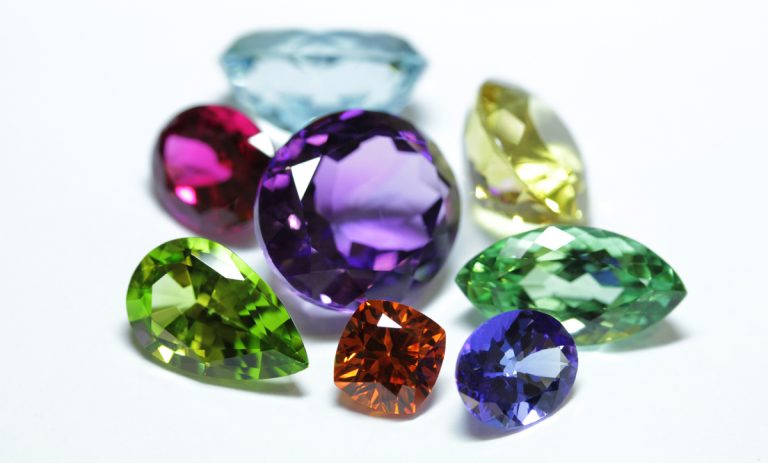
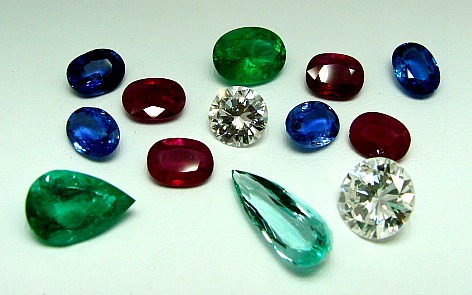
Like the precious metals market, the trade in gemstones has been experiencing growing expansion since the emergence of the first civilizations. In 2010, US$3.7 billion of colored stones were traded worldwide, which represents double the exports recorded in 2000. Among these trades, cut colored stones considered “precious”, namely sapphires, rubies and emeralds, alone account for nearly half and are increasing slightly on the market. On the other hand, exports of rough stones have slightly decreased over the past ten years and represent only 10% of the total value of exports.
Brazil at the forefront of the global gemstone market
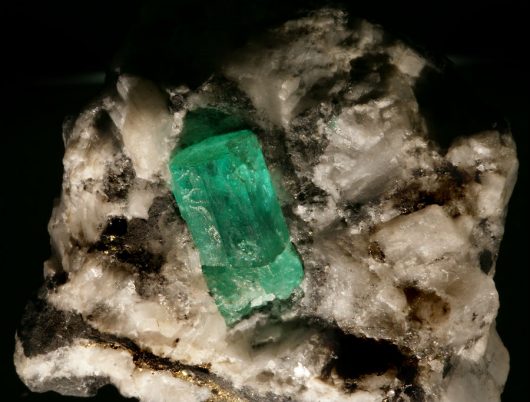
The Brazilian actor is indeed a producing country given the quantity of stones exported. For the most part, the precious stones, so-called ornamental stones used in jewelry, l’argenterie and l’orfèvrerie come from Brazilian lands that are recognized for their mineral wealth. Furthermore, Brazil presents itself as the leading exporting country of gemstones on a global scale, since other countries such as Japan and Canada have progressively withdrawn from the international scene.
For some time, the emergence of new players has represented an additional source of competition for Brazilian extractive activities. These deposits are mainly located in East Africa where the stones are sold at much lower prices.
For its part, Madagascar, the former major sapphire extraction center, has experienced a slight contraction in the total amount of its official exports, whose main partner is China. Moreover, the latter is the preferred partner of many producing countries and Brazil’s second partner.
India or the world’s processing workshop for colored stones
Processing goes to India, considered the world’s processing workshop ahead of China. In 2010, India processed more than US$100 million of rough stones into cut stones, followed by China with US$57 million. In addition to being a long-standing player in the diamond trade, India is also the world’s diamond cutting center. China, however, is a relatively recent player in the gem trade.
Moreover, these two countries follow very different sourcing strategies. This is explained in particular by the fact that India and China are also the two largest consumers of gold, especially gold jewelry. Owning gold is, indeed, a sign of wealth in the culture of these two Asian countries.
Although the processing sector is dominated by these two countries, many other countries are engaged in processing activities, namely Sri Lanka, which moreover has a well-trained and low-cost workforce; Colombia, which extracts a large portion of the world’s excellent-quality emeralds; and also Brazil. Austria and Israel are not left behind, being heavily involved in the diamond trade. As a European country, Germany has managed to establish itself in this type of activity.
The major gem-consuming countries
Referring to the mapping of exchanges, the majority of producing countries are located in the Southern Hemisphere while consuming countries are essentially located in the opposite hemisphere. Among the main consumers of gemstones are the United States, Europe, China and Japan, but overall the sector is dominated by the wealthy countries of the Northern Hemisphere. While the US and European markets have stabilized, Asian players have emerged in the sector.
Moreover, Hong Kong is likely to soon dethrone the USA with the Chinese giant consumer of stones Wong, Cheung & Lau, 1999. In addition, the Hong Kong international fair is on the verge of competing with the Tucson fair in the United States, which has nonetheless been considered the most important for decades. The trade in colored stones is notably observed in consumer and tourist centers.
In Mexico as in the United States, consumers are mainly visitors and not the local populations, as in places like Orlando or Las Vegas. We are indeed witnessing the restructuring of the global colored stone market even if in some respects this trade is taking on a multipolar form.